Introduction
Fashion portrait photography has evolved into a sophisticated art form that combines storytelling, styling, lighting, and personality into a single frame. Among the most timeless and impactful styles is the Cinematic Charcoal Suit Studio Editorial Portrait. This portrait concept embodies quiet confidence, luxury fashion, and refined minimalism while maintaining an ultra-realistic and authentic appearance.
"Cinematic Charcoal Suit Studio Editorial Portrait Prompt"
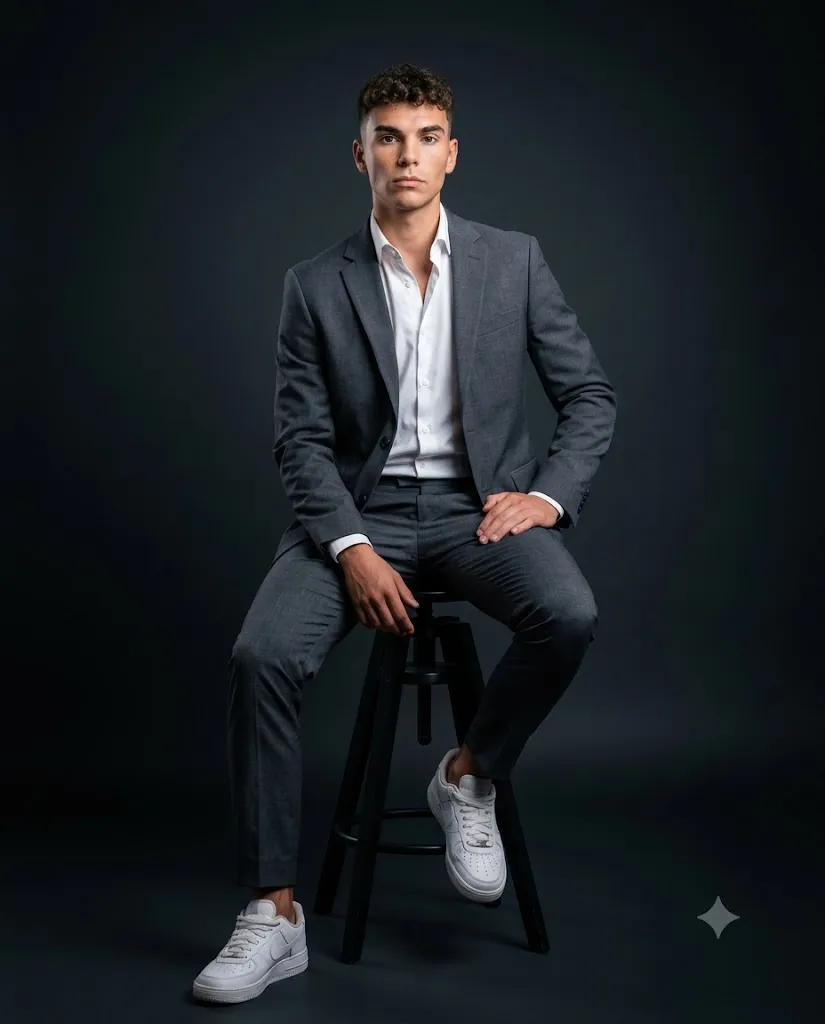
Create a full-body ultra-realistic cinematic studio portrait of a confident man seated on a minimalist black stool. Preserve exact facial identity from the reference image with no alterations to facial structure, skin texture, hairstyle, or natural features. The subject wears a tailored charcoal-gray suit with a slim modern cut, crisp white shirt open at the collar, sharply pressed trousers, and clean white leather sneakers. Dark studio environment with a seamless charcoal-to-slate-black gradient background. Soft directional lighting from above and slightly in front creates natural sculpting across the face and suit. Relaxed confident pose with one hand resting on the thigh and the other near the knee. Serious introspective expression looking straight ahead. Luxury fashion editorial style, monochrome palette, shallow depth of field, 85mm lens, ultra-detailed textures, professional magazine photography, cinematic lighting, 8K resolution, premium commercial quality.
The essence of this portrait lies in its balance between simplicity and sophistication. A sharply tailored charcoal-gray suit paired with a crisp white shirt creates an effortlessly elegant look that never goes out of style. Unlike overly dramatic fashion shoots filled with distracting elements, this editorial approach focuses entirely on the subject, expression, posture, and lighting.
The studio environment plays a significant role in creating the cinematic mood. A seamless charcoal-to-black gradient backdrop provides depth without introducing visual distractions. The subtle transition between dark tones helps separate the subject while maintaining a clean and luxurious aesthetic. Combined with soft directional lighting from above and slightly in front, the portrait gains sculptural depth and dimensionality.
Another defining characteristic is the pose. The subject sits confidently on a minimalist black stool, creating a composition that feels both relaxed and authoritative. The posture communicates confidence without appearing forced, making the image suitable for fashion editorials, luxury branding, portfolio photography, and magazine-style campaigns.
The monochrome-inspired palette of charcoal, black, white, and gray enhances the timeless appeal of the portrait. This restrained color scheme allows attention to remain on facial expression, tailoring details, and lighting quality. Every element contributes to a visual language of quiet luxury and understated elegance.
Modern AI image generation tools have made it possible to create highly realistic editorial portraits with remarkable detail. However, achieving professional results requires carefully structured prompts and thoughtful post-processing. Precise descriptions of clothing, lighting, facial identity preservation, composition, and camera settings are essential for generating consistent and believable images.
In this article, you will learn how to use photo editing to enhance studio portraits, discover the best tools for creating AI-generated editorial images, understand the process of crafting detailed prompts, and follow a complete editing workflow to achieve a premium Cinematic Charcoal Suit Studio Editorial Portrait.
How To Use Photo Editing?
Photo editing transforms a good portrait into a professional editorial-quality image. Even when working with highly realistic AI-generated portraits, careful adjustments help refine the final result while preserving authenticity.
The first stage involves exposure balancing. Studio portraits often feature controlled lighting, but subtle adjustments to highlights and shadows can improve dimensionality while maintaining realism. The goal is to preserve detail throughout the suit, face, and background.
Color grading plays an important role even in monochrome-inspired portraits. Charcoal fabrics should retain rich texture and depth without becoming flat black. Neutral skin tones should remain natural and balanced while preserving realistic contrast.
Skin retouching should remain subtle. Modern luxury fashion photography emphasizes natural texture rather than artificial perfection. Small distractions can be softened while maintaining pores, fine details, and authentic character.
Clothing enhancement is equally important. Tailored suits contain intricate fabric textures, seams, folds, and contours that contribute significantly to realism. Selective sharpening can help emphasize these details without making the image appear overly processed.
Background refinement ensures a smooth gradient transition while eliminating distractions. Maintaining a clean studio backdrop helps reinforce the minimalist editorial aesthetic.
Contrast adjustments should be approached carefully. Slightly deeper shadows can create dramatic depth, but excessive contrast may reduce the refined luxury feel.
Finally, selective sharpening around the eyes, hair, suit edges, and facial features ensures the portrait appears crisp and professionally finished.
Tools You Can Use For Prompt Copy and Create Photo
Creating a cinematic editorial portrait becomes much easier when using professional AI generation and editing tools.
AI Image Generation Tools
ChatGPT
ChatGPT is useful for creating highly detailed prompts that describe wardrobe, lighting, posing, camera settings, and overall artistic direction.
Midjourney
Midjourney excels at producing cinematic fashion imagery with exceptional atmosphere and visual storytelling.
Leonardo AI
Leonardo AI offers strong photorealistic portrait generation with detailed textures and realistic lighting.
Ideogram
Ideogram performs well for fashion-oriented portrait concepts and editorial imagery.
Adobe Firefly
Adobe Firefly provides professional image generation capabilities integrated into the Adobe ecosystem.
Professional Editing Software
Adobe Photoshop
Photoshop remains the industry standard for portrait retouching and advanced editing.
Adobe Lightroom
Lightroom is ideal for exposure adjustments, color grading, and tonal refinement.
Capture One
Capture One provides excellent color accuracy and professional workflow management.
Snapseed
Snapseed is a powerful mobile editor suitable for quick portrait enhancements.
PicsArt
PicsArt offers creative editing tools and social-media-friendly effects.
How To Edit Photo?
Step 1: Import the Portrait
Open the generated image in Photoshop, Lightroom, or Capture One.
Step 2: Correct Exposure
Balance highlights and shadows while preserving natural depth.
Step 3: Refine Skin Texture
Maintain realistic pores and subtle imperfections.
Step 4: Enhance Suit Details
Increase clarity selectively to reveal tailoring and fabric texture.
Step 5: Improve Background Gradient
Ensure smooth transitions between charcoal and black tones.
Step 6: Fine-Tune Contrast
Create cinematic depth without crushing shadow detail.
Step 7: Adjust White Balance
Maintain neutral tones and realistic skin color.
Step 8: Sharpen Facial Features
Focus on eyes, eyebrows, hairline, and lips.
Step 9: Enhance Clothing Separation
Subtly brighten key edges to improve subject-background distinction.
Step 10: Apply Cinematic Color Grading
Use restrained tones that emphasize luxury and sophistication.
Step 11: Add Subtle Grain
A small amount of film grain can create a premium editorial feel.
Step 12: Export the Final Image
Save at maximum quality in PNG, TIFF, or high-resolution JPEG format.
Conclusion
The Cinematic Charcoal Suit Studio Editorial Portrait Prompt represents the perfect blend of luxury fashion, professional studio photography, and timeless masculine elegance. Through controlled lighting, minimalist styling, and a carefully balanced monochrome palette, this portrait style creates an image that feels sophisticated, powerful, and effortlessly refined.
Unlike trend-driven photography styles that quickly become outdated, the charcoal suit editorial portrait remains relevant because of its simplicity and focus on strong visual fundamentals. The clean studio environment, tailored wardrobe, and restrained color scheme allow the subject’s personality and presence to take center stage.
For photographers, AI artists, content creators, and fashion enthusiasts, this portrait concept offers endless opportunities for professional-quality imagery. By combining detailed prompt writing with thoughtful editing techniques, it becomes possible to achieve results that rival high-end magazine editorials and luxury advertising campaigns.
Whether used for personal branding, portfolio development, social media content, fashion publications, or commercial projects, the Cinematic Charcoal Suit Studio Editorial Portrait delivers a powerful visual statement. Its blend of realism, confidence, and modern elegance ensures it remains one of the most versatile and compelling portrait styles in contemporary photography.